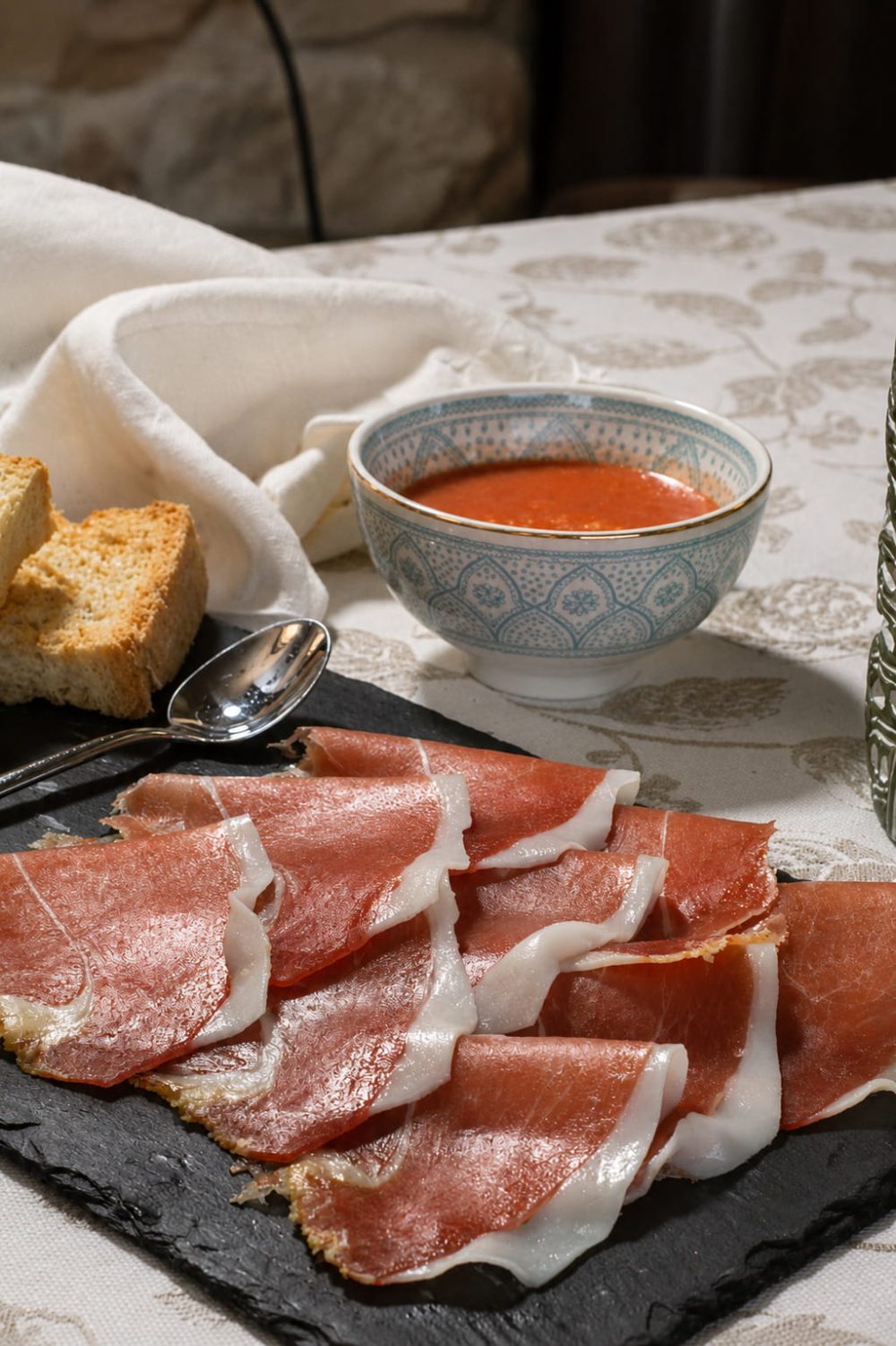

A Tradition of Stone Streets and Shared Devotion
Holy Week in Alquézar is celebrated in a simple yet deeply meaningful way, scaled to the rhythm of a small village, but with elements that make it stand out in the broader context of Aragon’s Somontano region. What defines this celebration is the attention to detail, the active involvement of the locals, and a historic setting that heightens the emotional atmosphere of each act.
Historical Roots and Evolution
Holy Week in Alquézar is grounded in long-standing religious and cultural traditions. Over time, it has taken on its own form, combining inherited rituals, liturgical art, and community participation, all of which continue to define it today.
An Enduring Legacy Around the Collegiate Church
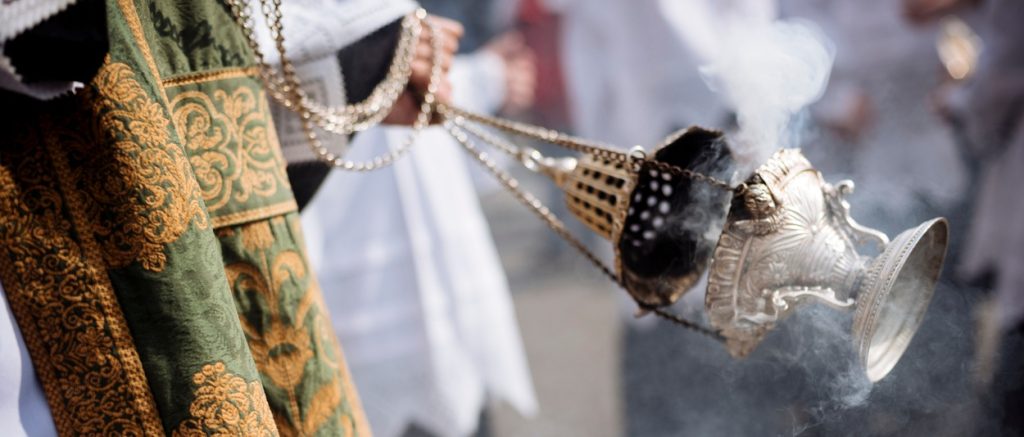
The earliest Holy Week celebrations in Alquézar are closely tied to the Collegiate Church of Santa María la Mayor, a Romanesque building founded after the Christian reconquest in the 11th century. For centuries, this church was the spiritual heart of the area and still houses important elements of religious heritage.
Among them, the Holy Thursday Monument stands out—a temporary structure made of painted canvas panels from the 18th century, assembled annually to house the Blessed Sacrament after the Mass of the Lord’s Supper. Now preserved in the Diocesan Museum of Huesca, the monument was restored in 2023 and is considered one of the most distinctive pieces of Aragon’s sacred heritage.
The first documented reference to the Holy Burial Procession appears in 17th-century ecclesiastical texts, although evidence suggests it may date back to the 16th century, during the Counter-Reformation. The Brotherhood of the Blood of Christ, documented since 1623, was responsible for organizing it for generations. Membership in this brotherhood was a source of pride, and roles in the procession were often passed down from parent to child.
The 20th Century and the Continuity of Tradition
Throughout much of the 20th century, Holy Week in Alquézar remained a modest but deeply rooted local tradition, with most religious events centered around the Parish Church of San Miguel, built in the 16th century. This is where the main liturgical services take place, including the Holy Thursday Mass and the Washing of the Feet, still celebrated each year at 6:00 p.m.
In the 1980s, coinciding with Alquézar’s designation as a Historic-Artistic Site in 1982, a process of revitalization began. Old floats and elements of the celebration were restored, and the community took on a more active role. One of the key figures in this renewal was José María Cabrero, who played a crucial role in organizing and preserving the event.
That renewed energy led to the founding of the Alquézar Cultural Association in 2011, which later became the San Nicostrato Cultural Association in 2016. Since then, it has been essential to keeping the celebration alive and ensuring its transmission across generations.
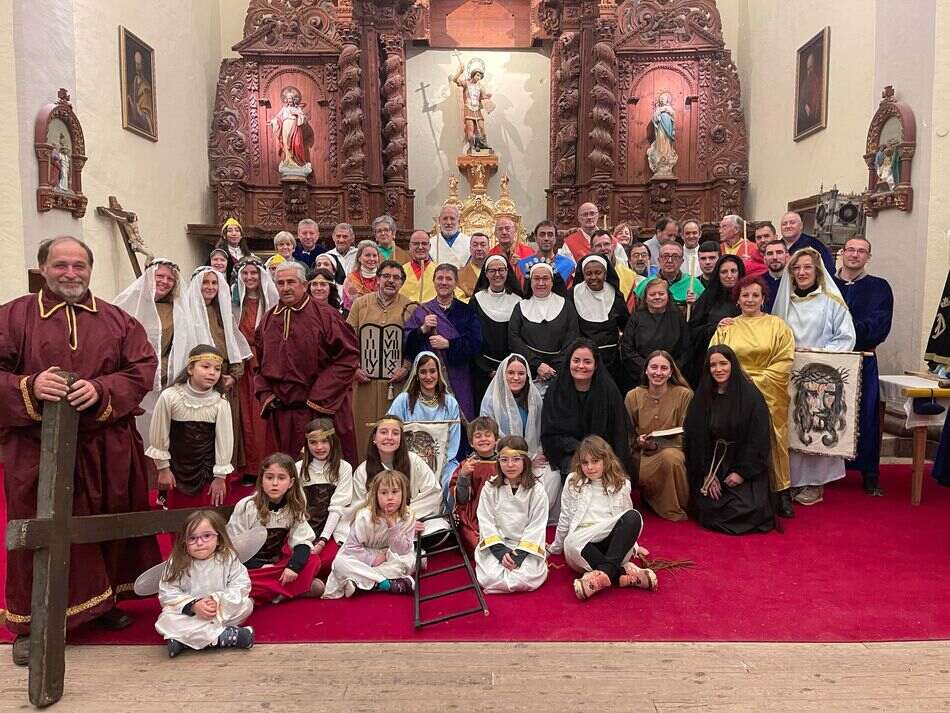
Meanwhile, the Good Friday Procession became the focal point of the week. Over time, it has been enriched by live biblical characters portrayed by locals—Jesus the Nazarene, Veronica, Roman soldiers—adding a dramatic and intergenerational dimension to the event.
For over a decade, neighboring villages such as Radiquero, Colungo, and Almazorre have joined the procession with their own images of Christ. This participation has fostered a spirit of regional fraternity and cultural exchange, giving the event greater visual variety and deeper communal meaning.
Holy Week Today: Rituals, Community and Setting
Beyond its historical depth, Holy Week in Alquézar remains a living celebration, fully integrated into the life of the village. The traditional liturgical calendar is followed each year, with simple but meaningful events, marked by strong local involvement and growing interest from visitors.
A Week of Processions and Sacred Moments
The week begins on Palm Sunday with the blessing of palms at 1:00 p.m. at San Hipólito, followed by a procession to San Miguel. The day also features a drum exhibition by the Brotherhood of La Merced from Barbastro and a tasting of local rosquillas and wine in the village square.
On Holy Thursday, the Mass of the Lord’s Supper and the Washing of the Feet are held at 6:00 p.m., while on Holy Saturday, the Easter Vigil is celebrated at 10:00 p.m. at the Hermitage of Nuestra Señora de las Nieves.
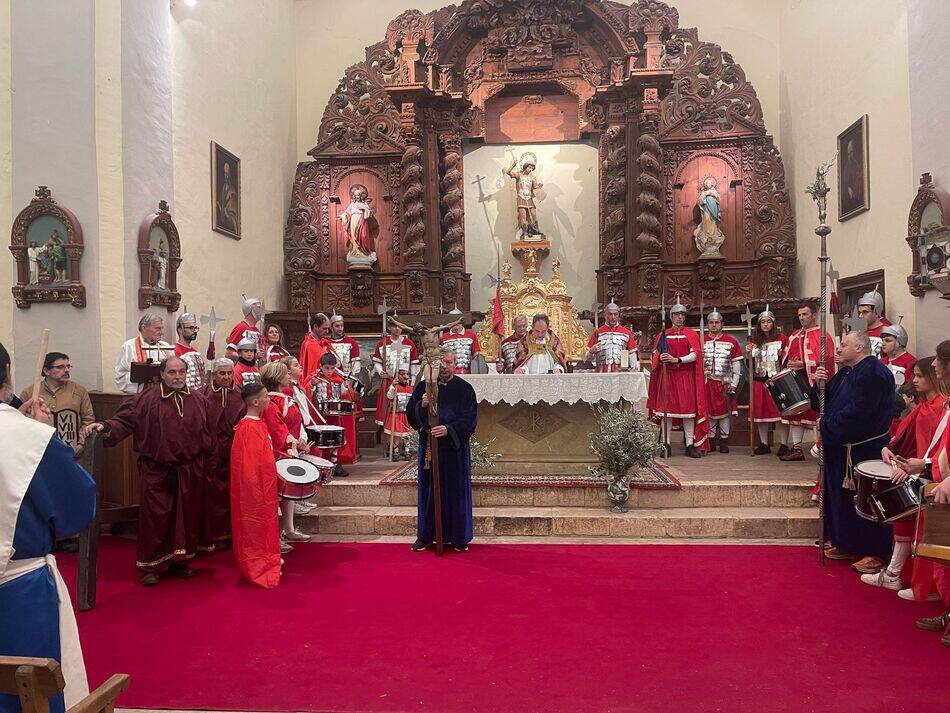
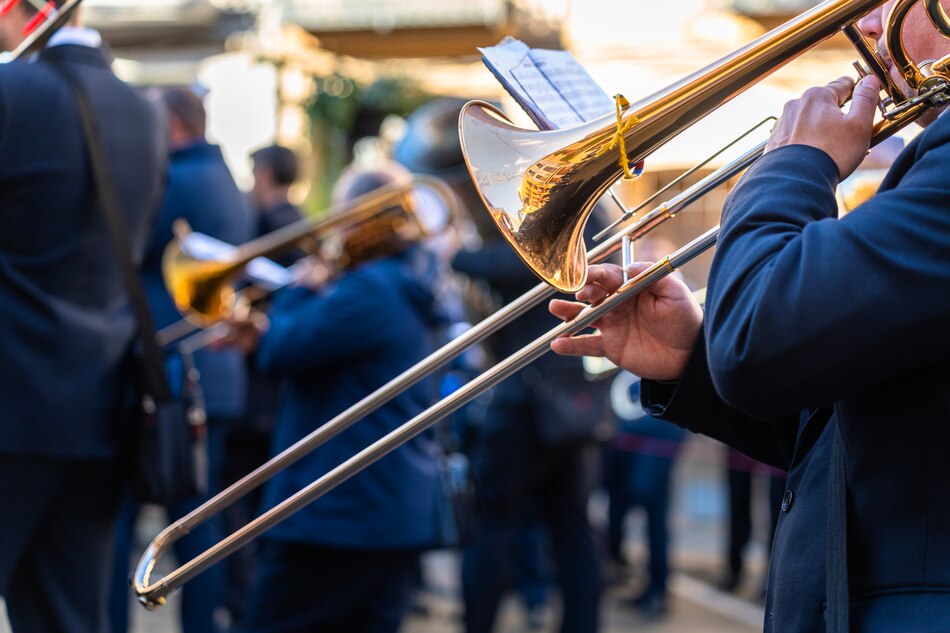
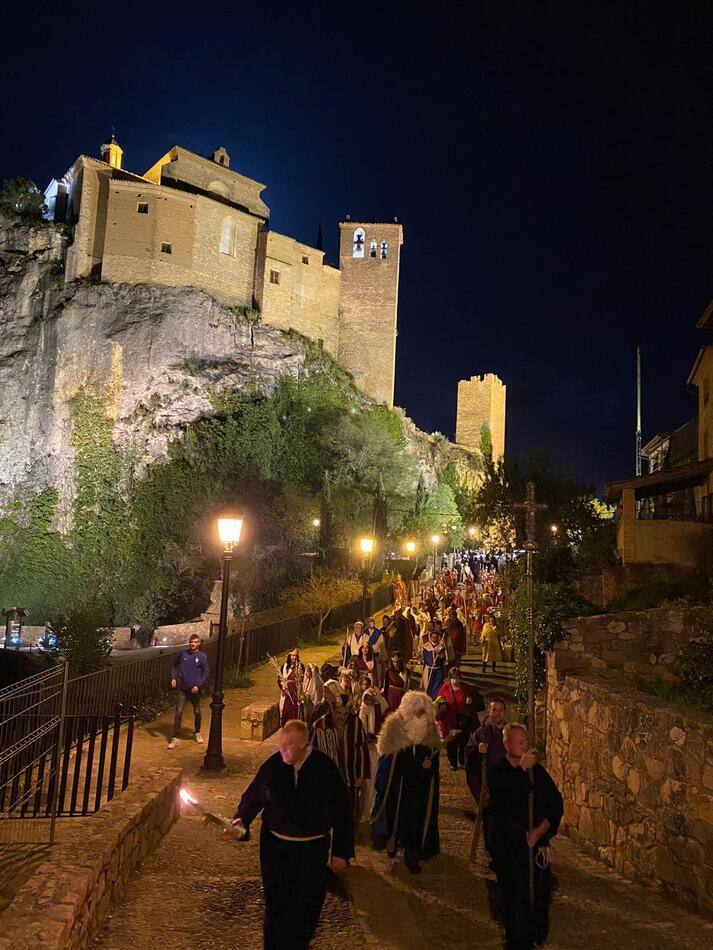
The central moment comes on Good Friday with the Holy Burial Procession, starting at 9:00 p.m. from San Miguel. The Roman squad descends in formation, keeping rhythm with drums and trumpets, escorting the key floats: the Holy Sepulchre Urn, the Christ of Lecina—a 12th-century wooden sculpture restored in 1988—and Our Lady of Sorrows, who closes the procession.
In addition to the sacred images, the procession includes a wide variety of biblical characters portrayed by locals: apostles, figures from the Old Testament, women of Jerusalem. Since 2019, young women from Alquézar have also been allowed to participate as Roman soldiers—a long-awaited change now celebrated as a milestone in the town’s evolving tradition.
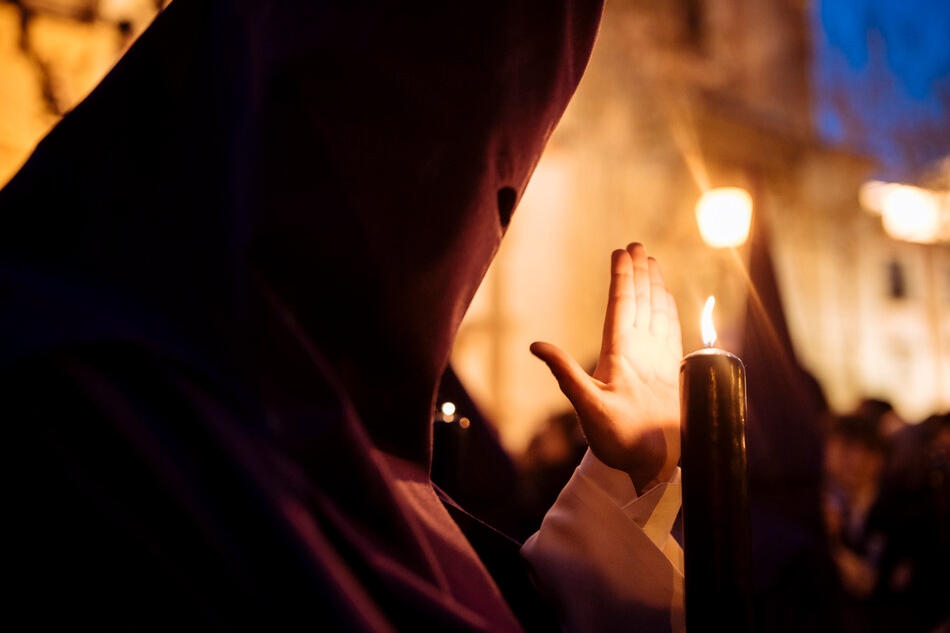
From the steep climb to the collegiate church to the drumbeats echoing through narrow alleyways, the entire route is full of symbolism and emotion. Watching the torchlit procession move through the darkness is an image that stays with you.
On Easter Sunday, the Mass of the Resurrection is held at 5:00 p.m., in a more joyful and festive atmosphere, marking the close of a deeply shared experience.
Tourist Interest and Cultural Outreach
Thanks to its architectural beauty and the carefully orchestrated staging of its events, Holy Week in Alquézar has gained traction as a cultural attraction. In 2023, the local tourist office welcomed 2,128 visitors during the Holy Week period.
To accommodate this interest, the town organizes guided tours of the historic center throughout the week, with multiple daily time slots. The Collegiate Church of Santa María la Mayor also extends its opening hours, and visitors can explore Casa Fabián, the local ethnographic museum, which offers insight into traditional rural life in the Somontano region.
Community Involvement and Regional Identity
One of the key reasons why Alquézar’s Holy Week remains so vibrant is the involvement of its people. There are no large, formal brotherhoods here; instead, everything is organized and carried out by families and local groups.
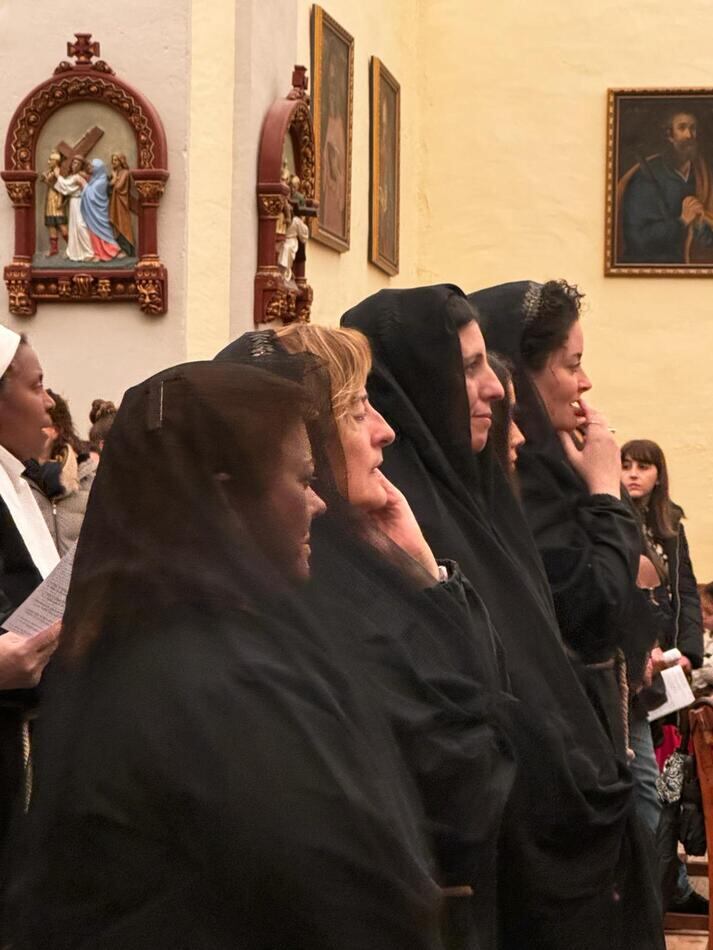
Roles, costumes, and responsibilities are often passed down from generation to generation, both for those who carry the floats and those who march as Roman soldiers. Children learn from a young age to play drums or walk in the procession. Taking on a role—be it an apostle, a Veronica, or a Hebrew woman—is a point of pride in the village.
For more than a decade, the towns of Radiquero, Colungo, and Almazorre have brought their own images of Christ to join the procession. This regional collaboration enhances the visual richness of the event and strengthens its role as a shared cultural experience.
A Living Legacy
Holy Week in Alquézar may not be grand in size, but it stands out for its human warmth, heritage, and spiritual depth. It is a celebration shaped by the village itself, sustained by its people and open to all who are looking for an authentic experience.
From the restoration of the baroque Holy Thursday Monument to the participation of neighboring communities and the visual power of the night-time processions, this is a tradition that proves it doesn’t need spectacle to endure—just a united community, shared faith, and a setting that breathes history.
Attending Holy Week in Alquézar is not just about watching a procession; it’s an opportunity to connect with a living tradition that returns each spring to fill the cobbled streets with meaning and memory.
And if you want to truly embrace the essence of this land, we invite you to complete the experience with the cuisine, history, and hospitality of Casa Pardina, where every detail matters and every visit becomes part of our shared tradition.
And you—have you experienced Holy Week in Alquézar, or is it still waiting to be discovered?