
More and more travellers want to eat well and, on top of that, to eat with meaning: to know where the food on their plate comes from. Zero-kilometre cuisine answers exactly that. At Casa Pardina, in the heart of Alquézar, we have spent years committed to local produce from the Somontano and the Sierra de Guara. In this article we explain what km0 cuisine is, what advantages it offers and how we apply it at our table every day.
What is zero-kilometre cuisine?
Zero-kilometre cuisine, also called km0 or local cuisine, is the kind that uses ingredients produced close to the restaurant, usually within a small radius around the kitchen. The aim is to work with fresh, seasonal produce, reduce transport and support local producers. It is not a passing trend: it is a way of cooking that restores the direct relationship between the land, the producer and the table.
Differences between km0 and conventional cuisine
This table summarises the main differences:
| Aspect | Zero-kilometre cuisine | Conventional cuisine |
|---|---|---|
| Origin of produce | Local and nearby | Variable, often distant |
| Season | Seasonal produce | Available all year round |
| Transport | Minimal | Frequent long distances |
| Relationship with the producer | Direct and known | Usually through intermediaries |
| Freshness | High | Variable |
Advantages of zero-kilometre cuisine
1. More flavour and freshness
Produce harvested nearby and at its seasonal peak reaches the table full of flavour. The freshness shows in a freshly picked vegetable, in local meat or in an olive oil from the Somontano mills.
2. Support for local producers
Buying from farmers, livestock keepers and artisans in the region helps keep the rural economy alive and preserves traditional trades and varieties that would otherwise be lost.
3. Lower environmental impact
By reducing the transport of food, local cuisine lowers the carbon footprint associated with each dish. It is a simple way to cook more sustainably.
4. Authenticity and sense of place
Km0 cuisine connects the dish with the land. Eating produce from Alquézar and its surroundings in Alquézar means experiencing the complete gastronomic experience of the Somontano.
How we apply km0 cuisine at Casa Pardina
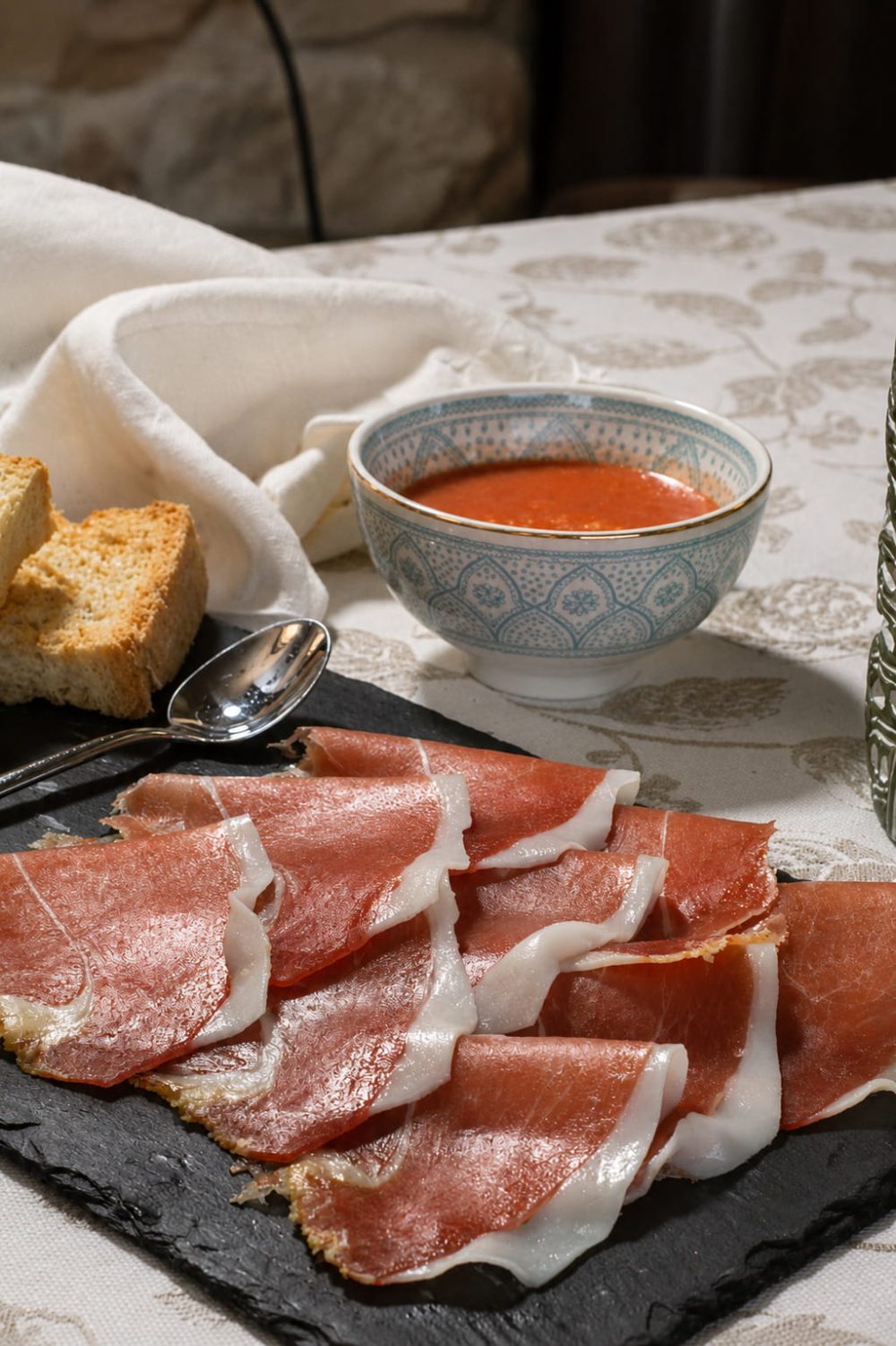
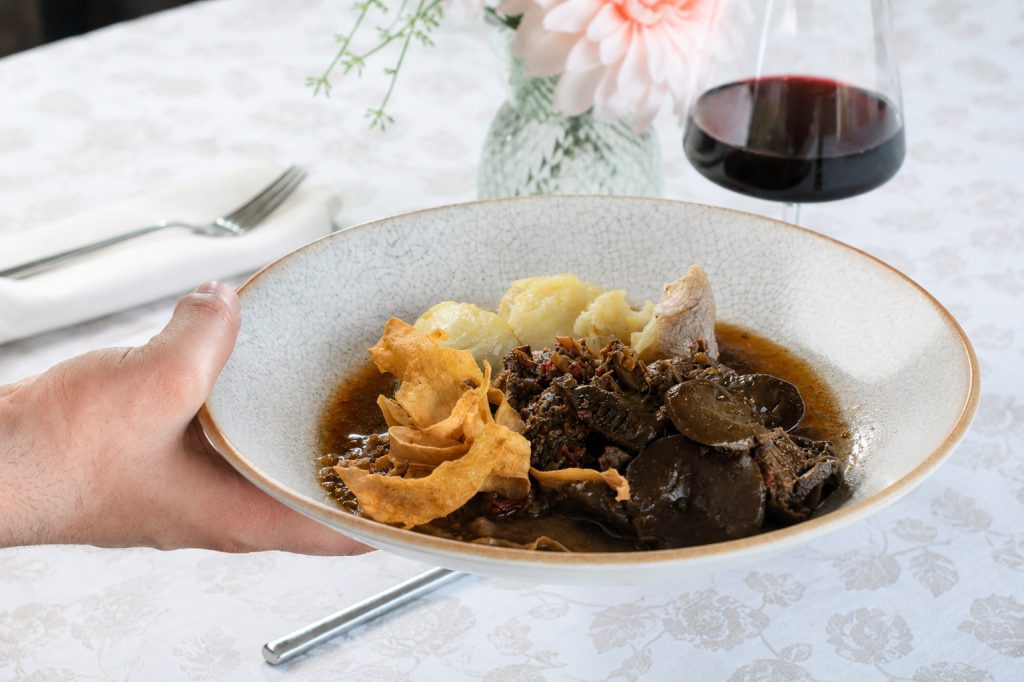
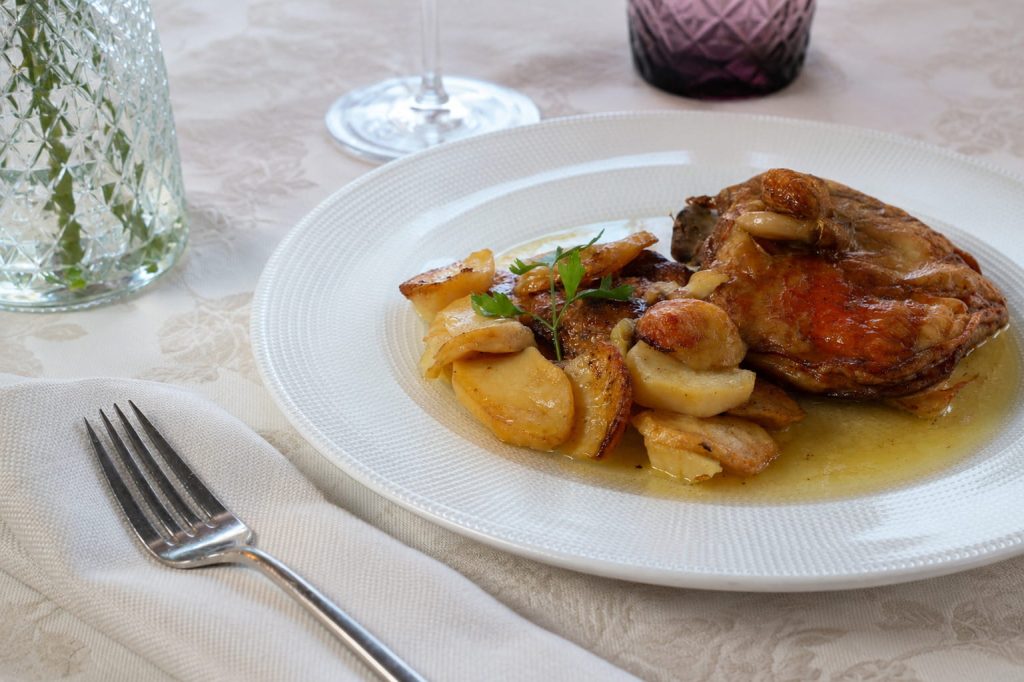
At Casa Pardina, local cuisine is not a label, it is the way we work. We select produce from the Somontano and the Sierra de Guara and adapt our menu to what each season offers. We work with the pink tomato of Barbastro in summer, with Ternasco de Aragón lamb, with the extra virgin olive oils of the area and with seasonal produce such as mushrooms or game in autumn and winter.
This closeness to the produce allows us to offer traditional Aragonese cuisine with ingredients we know first-hand, keeping the freshness, flavour and identity of the land in every dish.
Local produce by season
Our menu changes with the landscape. These are some of the local products that define each time of year:
| Season | Featured produce |
|---|---|
| Spring | Garden vegetables, asparagus and early greens |
| Summer | Pink tomato of Barbastro and seasonal vegetables |
| Autumn | Mushrooms, game and nuts such as the Guara almond |
| Winter | Stews, large game and cured products |
How to recognise a zero-kilometre restaurant
- The menu changes according to the season.
- Specific local products and producers are mentioned.
- Local ingredients prevail over imported ones.
- The team can explain where each product comes from.
- Traditional varieties and recipes of the region are valued.
Frequently asked questions about zero-kilometre cuisine
What does zero-kilometre cuisine mean?
It means cooking with ingredients produced near the restaurant, fresh and seasonal, reducing transport and supporting local producers.
Is km0 cuisine the same as organic cuisine?
Not exactly. Km0 cuisine prioritises the proximity of the produce, while organic refers to the way it is grown. They can overlap, but they are not the same.
Why is local cuisine more sustainable?
Because reducing the transport distance of food lowers the carbon footprint and supports the local economy.
Where can you eat km0 cuisine in Alquézar?
At Casa Pardina, in the centre of Alquézar, where we work with produce from the Somontano and the Sierra de Guara and a seasonal menu.
Is zero-kilometre cuisine more expensive?
Not necessarily. By working with seasonal produce and nearby suppliers, a good balance between quality and price is often achieved.
Discover our local cuisine in Alquézar
At Casa Pardina we believe the best cuisine is born from respect for the produce and for those who grow it. If you want to experience the authentic gastronomy of the Somontano with local ingredients and time-honoured Aragonese recipes, we await you in Alquézar. Book your table and discover the flavour of zero kilometres.